This is Part 5 of the 16-part Kingdom of God series.
What Does the Bible Say About Fear?
What does the Bible say about fear? Most people expect a list of verses that tell us not to be afraid. And the Bible does contain those verses, dozens of them. But the more searching answer is that Scripture treats fear as a narrative about how the world works, more than as an emotion to manage. Fear tells a story. It says that stability is rare, that safety must be earned, and that what matters most is always at risk of being lost.
Most of us can affirm God’s goodness on Sunday and still lead from scarcity on Monday. We believe He provides, and then spend our weeks managing anxiety. That gap exists, and it is mainly a story problem. So far in this series we have said that the Kingdom is already present, that imagination shapes what we are able to perceive, and that Jesus hides the Kingdom in ordinary places. Here we turn somewhere more personal: the story of fear that competes with the Kingdom, and the truer story Jesus tells in its place.
Fear rarely announces itself as a theological position. It shows up in tone. Plans feel rushed, and conversations revolve around what might be lost. Energy goes toward protecting what seems fragile, and we stop noticing what God might already be doing. For ministry leaders, this dynamic is especially dangerous because it shapes communication, fundraising, and organizational culture without anyone naming it as fear.
Table of Contents
How Fear and Scarcity Become the Background Story of Christian Life
What does the Bible say about fear? The first answer is this: fear as a feeling is temporary, but fear as a narrative is formational. The difference matters because a feeling passes, but a narrative trains perception over time. When fear becomes the background story of how someone interprets the world, it reshapes what they notice, what they trust, and what they believe is possible.
Scarcity adds a second layer. It says there will never be enough, that resources, time, opportunity, and influence are fundamentally limited and must be protected through constant vigilance. When scarcity becomes the assumed atmosphere of Christian life, every setback becomes evidence that the mission is failing. Every financial pressure becomes confirmation that the future is uncertain. Cultural change is experienced primarily through the lens of loss.
Henri Nouwen described this dynamic with unusual clarity. He observed that most people, including most Christian leaders, live with what he called a “house of fear” as their primary residence. In that house, identity is built on accomplishment, relationships are shaped by competition, and self-worth depends on external validation. Nouwen argued that the spiritual life begins when we learn to move from the house of fear to what he called the “house of love,” where identity is rooted in belovedness. The move is a slow, ongoing formation that requires honesty about which house we are living in.
This theology describes what happens inside ministries, churches, and leadership teams every day. Fear and scarcity seldom appear in explicit language. They show up as urgency, as pressure to prove results, as the unspoken assumption that if the work looks small, it does not count.
The World Jesus Describes When He Addresses Fear
Jesus treats fear as a rival story about reality that must be replaced by a truer one.
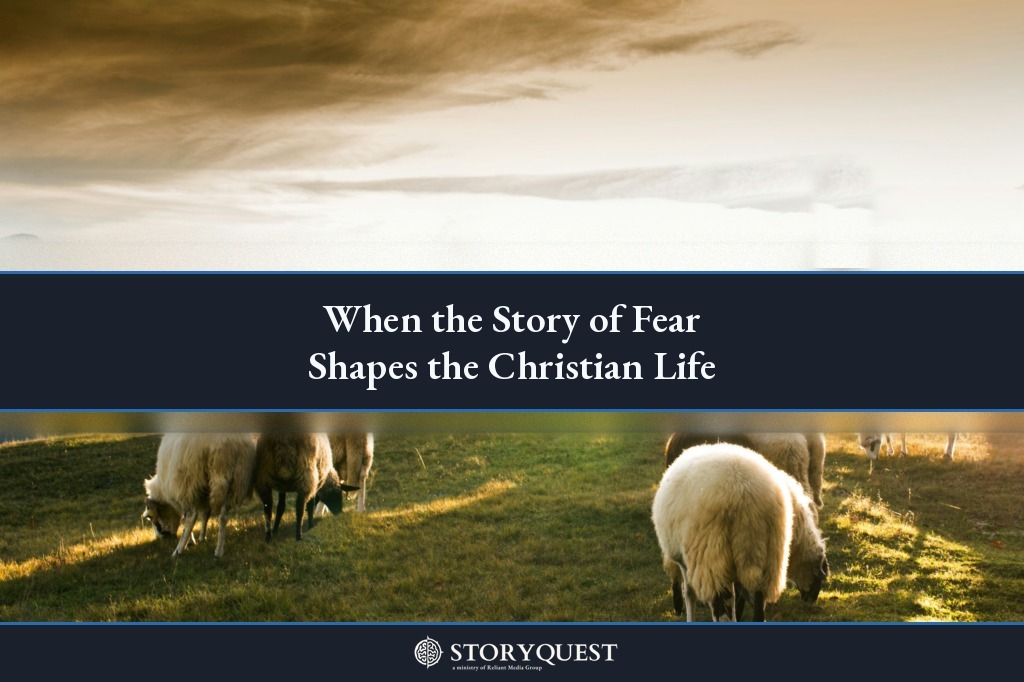
When He tells His followers to consider the birds of the air and the lilies of the field, He is describing the kind of world they inhabit, a world kept within the care of a Father whose posture toward His children is generosity. When He says, “Fear not, little flock, for it is your Father’s good pleasure to give you the kingdom” (Luke 12:32, ESV), He is making a claim about reality itself. The world is governed by a God who delights to share His reign.
That single verse contains the entire argument of this article. The Father’s posture is pleasure, and what He gives is a Kingdom to inhabit. The “fear not, little flock” statement reframes the reality that His followers’ pressures exist within.
If the Kingdom is, as Dallas Willard put it, the range of God’s effective will already operating in the world, then scarcity-driven leadership is exhausting and inaccurate. The most basic truth about the world is that a generous God keeps it.
The Sermon on the Mount is filled with these reversals. Jesus sets aside common assumptions about survival and status and points His followers toward trust, generosity, and attention to God’s presence. “Therefore do not be anxious about tomorrow, for tomorrow will be anxious for itself. Sufficient for the day is its own trouble” (Matthew 6:34, ESV). Jesus is asking His followers to inhabit a different story about what is true and what can be trusted.
How Fear Narrows the Ability to See the Kingdom
Fear troubles the heart and also changes what the eyes can take in. A fear-shaped imagination struggles to notice the small movements of grace because it is constantly scanning for signs of decline or danger, and fear has narrowed the aperture of what we are able to notice.
Curt Thompson’s work in interpersonal neurobiology makes this concrete. When the brain operates from a fear state, the prefrontal cortex, the part of the brain responsible for creative thinking, empathy, and long-range vision, becomes less accessible. The limbic system takes over, narrowing attention to immediate threats. In that state, a person can look directly at evidence of God’s steady work and not register it, because fear has narrowed the aperture of perception.
This means that fear literally changes what we are able to see. Over time, people and entire organizations may begin to assume that God is absent simply because His work does not appear in the dramatic forms they have been trained to expect. The Kingdom is still present. The eyes have been retrained by a different story.
What Jesus Confronts Is the Narrative Behind the Emotion
Throughout the Gospels, Jesus regularly exposes assumptions people did not realize they had. He challenges the belief that wealth guarantees security. He questions the idea that power defines greatness. He asks His listeners to reconsider the narratives they have inherited about success, safety, and control.
So the friction many Christians feel in their inner life may not be a sign that something is wrong with their faith. It may be a sign that two stories are colliding — the story of scarcity and the story of the Kingdom — and that collision, uncomfortable as it is, may be exactly where formation begins.
Henri Nouwen spent much of his later career naming this exact conflict in the lives of Christian leaders. He observed that the three temptations Jesus faced in the wilderness, the temptation to be relevant, the temptation to be spectacular, and the temptation to be powerful, are the daily environment of ministry leadership today. Fear drives leaders toward all three because relevance, spectacle, and power all promise the security that fear says is missing. Nouwen’s alternative was identity: to be the beloved of God before being the leader of anything.
Where Fear Shows Up in Ministry Communication
This dynamic becomes especially visible in how ministries talk about their work. When communication is shaped by scarcity, the tone mirrors the urgency and anxiety that dominate the wider culture. Messages emphasize risk, deadlines, and the possibility of losing momentum. Over time, supporters begin to hear the mission through the lens of crisis and lose sight of God’s ongoing faithfulness.
A different approach begins by naming where God is already at work. Ministries ask people to participate in something God is already doing. The tone shifts from pressure to testimony, and supporters are positioned as partners in a larger story of grace and renewal.
The Story Beneath the Strategy
Fear and scarcity offer a powerful account of the world. They promise control and demand constant vigilance. Yet they shrink our vision of reality and train us to overlook the steady work of God.
Jesus offers a larger story, where the Father’s generosity outlasts scarcity, where grace moves through ordinary life, where the Kingdom grows even when we cannot see it clearly. What does the Bible say about fear? Ultimately, it says that fear tells a story about a world that is not the one God made. Start by noticing which story is shaping the way you see your life this week — and to let the Kingdom retrain it.
FAQ
What does the Bible say about fear?
Scripture treats fear as a narrative about how the world works. Jesus addresses fear by describing a different reality: one governed by a generous Father. In Luke 12:32 He says, “Fear not, little flock, for it is your Father’s good pleasure to give you the kingdom” (ESV). The biblical response to fear is re-formed perception.
What does “fear not, little flock” mean in Luke 12:32?
Jesus is addressing disciples who feel small, vulnerable, and under-resourced. His response is to reframe the reality they inhabit. The Father’s posture is pleasure, and what He gives is a Kingdom to participate in. The verse reframes fear as a narrative problem.
What is a scarcity mindset in the Christian life?
A scarcity mindset occurs when believers assume that resources, opportunities, and influence are fundamentally limited and must be protected. This posture shapes ministry decisions, donor communication, and leadership culture in ways that emphasize urgency and anxiety and crowd out trust in God’s provision. It competes directly with the Kingdom story Jesus announces.
How does fear affect spiritual perception?
Neuroscience research shows that when the brain operates from a fear state, the capacity for creative thinking, empathy, and long-range vision narrows. This means fear literally changes what we are able to see. In spiritual terms, a fear-shaped imagination struggles to notice God’s steady work because it is scanning for decline and danger.
How can ministries avoid communicating from fear or scarcity?
By beginning with where God is already at work. Dignity-first storytelling names specific, honest realities of transformation without inflating outcomes or creating urgency. This shift repositions supporters as partners in God’s ongoing work.
Why does recognizing fear as a narrative matter for leaders?
Because most leadership failures are failures of attention. Leaders stop noticing which story is shaping their decisions and begin operating from urgency, self-protection, and performance metrics. Recognizing fear as a narrative opens the possibility of inhabiting a different story — the one Jesus describes.
Previous: Part 4: Why the Kingdom Hides in the Small Things
Next: Part 6: When Ministry Becomes a Substitute for God
At StoryQuest, we help leaders recover a Kingdom-shaped imagination for the work they already do — through story, Scripture, and guided reflection. If you’d like to try that, explore StoryQuest with us.
Sources
Scripture quotations are from The ESV Bible (The Holy Bible, English Standard Version), copyright 2001 by Crossway. Used by permission.
Formation voices referenced: Dallas Willard, The Divine Conspiracy (HarperOne, 1998). Henri Nouwen, In the Name of Jesus: Reflections on Christian Leadership (Crossroad, 1989) and Lifesigns: Intimacy, Fecundity, and Ecstasy in Christian Perspective (Doubleday, 1986). Curt Thompson, The Soul of Shame and Anatomy of the Soul (IVP, 2015; IVP, 2010).